
7 Signs of Burnout in Women: What Your Body Is Telling You

Updated: Aug 18
You’re still getting things done. You’re still showing up. From the outside, you look fine. But something feels off. You’re tired in a way that rest doesn’t fix. You’re pushing, but it’s taking more out of you than it should.
Burnout doesn’t always look like falling apart. Sometimes it looks like functioning… at a cost.
What Burnout Actually Is
Burnout isn’t just doing too much. It’s staying disconnected from your body for too long. It’s when your capability keeps overriding your capacity. And eventually, your body starts speaking. Not to punish you, but to get your attention.
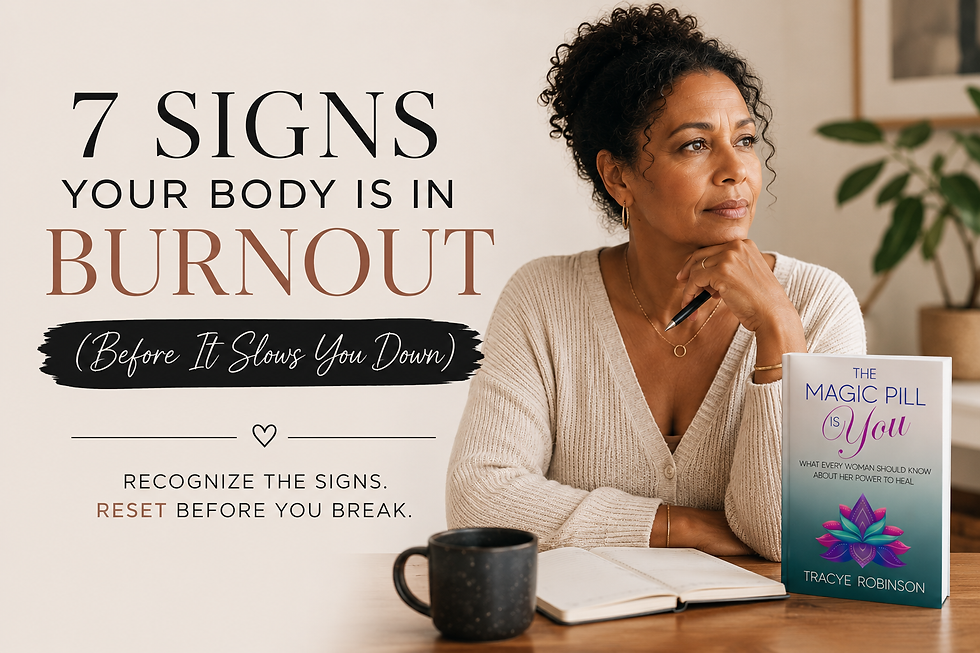
7 Signs Your Body Is in Burnout
You’re tired, but you can’t slow down. Your body is exhausted, but your mind won’t let you rest. You may keep answering messages, thinking about what still needs to be done, or feeling guilty for sitting still. Your body is asking for recovery, but your habits are still operating in “keep going” mode.
Your thinking feels foggy. Clarity is harder to access. You may reread the same thing several times, forget what you walked into a room for, or struggle to make simple decisions. When your system is overloaded, mental clarity is often one of the first things to slip.
You’re more reactive than usual. Your patience is thinner. Small things may irritate you faster than they normally would. You may notice yourself snapping, withdrawing, or feeling emotionally flooded over things that usually wouldn’t affect you as much.
Sleep isn’t restoring you. You wake up tired. You may be sleeping, but your body still doesn’t feel recovered. Burnout can keep your system in a state of alert, making true rest harder to reach even when you’re technically getting enough hours.
Your body feels tight or tense. Shoulders, jaw, chest—always holding something. You may notice yourself clenching your jaw, lifting your shoulders, holding your breath, or carrying tension without even realizing it. Your body can stay braced long after the immediate stressor is gone.
You’re moving on autopilot. You’re doing, but not fully present. You keep checking things off the list, but you don’t feel connected to what you’re doing. Life can start to feel more like a series of tasks than something you’re actually experiencing.
You don’t feel like yourself. This is the clearest signal. You may feel flatter, less interested, less patient, or disconnected from things that normally bring you joy. Sometimes the biggest warning sign is simply realizing, “I don’t feel like me lately.”
What Most People Miss
Your body isn’t breaking down. It’s speaking up. Burnout isn’t weakness. It’s feedback. And if you keep overriding it, the signals don’t go away—they get louder.
What To Do When You Notice The Signs
You don’t fix burnout by pushing harder. You correct it by changing your relationship with your body.
Start here:
Stop overriding your signals. When your body says slow down, pause.
Create space before your next move. Even a few minutes of stillness helps.
Simplify your day. Not everything deserves your energy.
Regulate before you respond. Breathe first. Then decide.
If This Feels Familiar
This is exactly the work I do in my private consulting—helping women understand what their body is signaling, restore clarity, and come back into alignment without burning out.
If you’re ready for that level of support, you can learn more or book a session here:
And if you want to go deeper on your own, my book: https://www.divinelotusgroup.com/book
will guide you back to trusting what’s already within you.
Tracye Robinson is a transformational wellness speaker and author who helps women and organizations recognize the hidden signs of chronic stress and burnout before they become harder to ignore. Learn more about her speaking programs here.
Feel Good. Be Well.



Comments